











FIBC Bulk Bags
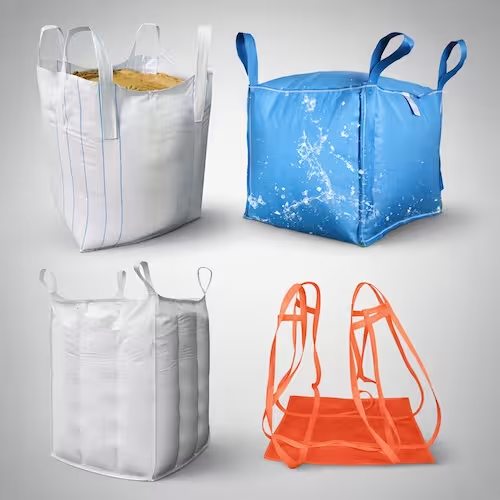
Custom 1 Ton Jumbo Bags for Efficient Bulk Material Handling
SeFluid supplies FIBC Bulk Bags for the storage, handling, and transportation of dry bulk materials such as chemicals, powders, granules, minerals, agricultural products, construction materials, and other flowable products.
Also known as FIBC bags, bulk bags, jumbo bags, big bags, and flexible intermediate bulk containers, these industrial packaging bags provide a practical alternative to rigid containers and smaller bags when large quantities of dry materials need to be handled efficiently.
Available with different bag constructions, filling and discharge configurations, lifting options, liners, printing, and capacities, SeFluid can provide FIBC Bulk Bags configured for specific material-handling requirements.
정보 요청
What Are FIBC Bulk Bags?
FIBC stands for Flexible Intermediate Bulk Container. An FIBC Bulk Bag is a flexible industrial container generally manufactured from woven polypropylene fabric and designed to hold and transport dry, flowable bulk materials.
Depending on the application, an FIBC bag can be supplied with different top and bottom configurations, lifting loops, inner liners, coatings, and safety factors.
Common names for this product include:
- FIBC Bags
- FIBC Bulk Bags
- Bulk Bags
- Jumbo Bags
- Big Bags
- Flexible Intermediate
- Bulk Containers
- Bulk Sacks
- 1 Ton Bags
- 1 Ton FIBC Bags
일반적인 기술 매개변수
FIBC bags can be customized according to the material, filling method, discharge requirements, handling equipment, and transportation conditions.
| 사양 | Available Options |
|---|---|
| Bag Material | PP Woven Fabric |
| 용량 | Customized according to application |
| Typical Capacity | 500–2,000 kg, depending on design |
| Bag Construction | U-Panel, Four-Panel, Circular, Baffle |
| Top Design | Open Top, Duffle Top, Filling Spout |
| Bottom Design | Flat Bottom, Discharge Spout, Customized Outlet |
| Lifting | 2, 4, or customized lifting loops |
| Inner Liner | Optional PE Liner |
| Fabric | Coated or Uncoated PP Woven Fabric |
| 인쇄 | Customized Logo and Product Information |
| Color | 맞춤형 |
| Safety Factor | Customized according to application |
| Filling Method | Manual or Mechanical Filling |
| Discharge Method | Manual or Controlled Discharge |
| 애플리케이션 | Industrial, Chemical, Agricultural, Food, Construction, Mineral and Other Dry Bulk Materials |
Final specifications should be confirmed according to the material, required Safe Working Load (SWL), filling and discharge equipment, transportation conditions, and applicable regulations.
1 Ton FIBC Bulk Bags
1 Ton FIBC Bags are widely used when large quantities of dry bulk materials need to be packaged, transported, stored, and discharged efficiently.
A 1 ton bulk bag can be configured with suitable lifting loops, filling openings, discharge spouts, liners, and fabric construction according to the application.
Typical applications include:
- 화학분말
- Mineral powders
- 비료
- Agricultural products
- Plastic pellets
- Pigments
- 건축 자재
- Cementitious materials
- Industrial powders
- Granular materials
The actual Safe Working Load should be determined according to the bag design and application rather than assuming that every FIBC labeled “1 Ton” has the same load capacity.
FIBC Bag Construction Options
U-Panel FIBC Bags
U-Panel bags are manufactured using a U-shaped body construction combined with side panels. This design provides a practical balance between manufacturing efficiency, strength, and capacity.
Four-Panel FIBC Bags
Four-panel FIBC bags are constructed from four separate fabric panels. They provide a relatively square shape and can be suitable where stable stacking and efficient warehouse utilization are important.
Circular FIBC Bags
Circular or tubular FIBC bags are manufactured from tubular woven fabric. They can provide a smooth exterior surface and are suitable for various bulk-material applications.
Baffle FIBC Bags
Baffle bags use internal fabric baffles to help maintain a more stable rectangular shape when filled. They can improve space utilization during storage and transportation.
FIBC Top Configurations
Different filling systems require different bag-top designs.
Open Top: An open-top FIBC provides a simple and economical solution for applications where the bag can be filled from above.
Duffle Top: A duffle-top design provides a wider opening for convenient filling and can be adapted to different filling systems.
Filling Spout: A filling spout allows controlled connection between the FIBC bag and the filling equipment. It can help reduce material loss and improve filling efficiency.
FIBC Bottom Configurations
Flat Bottom
A flat-bottom construction provides a simple configuration for applications where the material can be removed by opening or cutting the bag.
Discharge Spout
A bottom discharge spout provides more controlled discharge and can be connected to downstream conveying or processing equipment.
Customized Discharge Outlet
The outlet dimensions, length, closure configuration, and discharge arrangement can be customized according to the customer’s handling system.
Optional PE Liners
For materials requiring additional protection from moisture, contamination, or interaction with the woven fabric, an internal polyethylene liner can be incorporated into the FIBC bag.
PE liners can be considered for applications involving:
- Fine powders
- Hygroscopic materials
- Moisture-sensitive products
- Food-related dry materials
- 화학분말
- Products requiring improved containment
The appropriate liner material and construction should be selected according to the characteristics of the packaged product.
FIBC Bulk Bag Applications
FIBC Bulk Bags are used across a wide range of industries for handling dry and flowable bulk materials.
화학 산업
FIBC bags can be used for packaging and transporting various chemical powders, additives, raw materials, and industrial compounds.
음식 산업
Where the appropriate food-contact materials and manufacturing controls are specified, FIBC bags can be configured for suitable food and ingredient applications.
Agriculture and Fertilizer
Bulk bags are commonly used for fertilizers, seeds, grains, agricultural additives, and other dry agricultural products.
Construction
FIBC bags can be used for cementitious materials, sand, aggregates, powders, and other dry construction materials.
Minerals and Mining
Heavy-duty bulk bags can be configured for mineral powders, ores, processed minerals, and other dry mineral materials.
Plastics and Polymers
FIBC bags are suitable for handling plastic pellets, resin materials, polymer powders, and other granular products.
Pigments and Powders
With appropriate liners and discharge configurations, FIBC bags can be adapted for pigments, fillers, additives, and other fine powders.
Key Advantages of FIBC Bulk Bags
High Bulk Capacity
FIBC bags can handle significantly larger quantities of dry material than conventional small sacks, reducing the number of individual packages required.
Efficient Handling
Integrated lifting loops allow FIBC bags to be moved using suitable forklifts, cranes, hoists, or other material-handling equipment.
Flexible Configuration
Top openings, bottom outlets, liners, fabric construction, dimensions, printing, and lifting arrangements can be customized for different applications.
Space-Efficient Transportation
When empty, flexible bulk bags require considerably less storage space than many rigid containers.
Reduced Packaging Operations
Using one bulk bag instead of numerous smaller bags can simplify filling, handling, storage, and material-transfer operations.
Suitable for Automated Systems
Appropriately configured FIBC bags can be integrated with filling, weighing, conveying, lifting, and discharge systems.
FIBC Bulk Bag Safety and Load Capacity
The appropriate FIBC design depends on the Safe Working Load (SWL), material density, filling method, lifting method, transportation conditions, and required safety factor.
Important parameters include:
- Safe Working Load (SWL)
- Safety Factor
- Bag dimensions
- Fabric strength
- Lifting-loop configuration
- Filling conditions
- Discharge conditions
- Material bulk density
- 운송 요건
- Storage conditions
FIBC bags should only be lifted and handled using equipment and procedures appropriate for their specified design and rated load.
For hazardous, food-contact, pharmaceutical, or regulated applications, the required material specifications, certifications, and applicable standards should be confirmed before production.
Custom FIBC Bulk Bags
SeFluid can provide customized FIBC Bulk Bags according to project requirements.
Customization options may include:
- Bag dimensions
- Working load
- Bag construction
- Fabric type
- Fabric coating
- Bag color
- Logo printing
- Filling opening
- Filling spout
- Discharge spout
- Liner
- Lifting loops
- Baffles
- Dust-control features
- Customized packaging
For large-volume industrial applications, the bag design can be coordinated with the customer’s existing filling, handling, storage, and discharge equipment.
Why Choose SeFluid FIBC Bulk Bags?
SeFluid focuses on equipment and solutions for fluid handling, processing, and industrial production. For customers requiring bulk-material packaging together with processing equipment, FIBC Bulk Bags can be incorporated into a broader material-handling solution.
Our approach focuses on:
- Application-specific product selection
- Customized bag configurations
- Industrial material handling requirements
- Integration with filling and discharge systems
- Export-oriented manufacturing
- Technical communication and project support
If you already have material specifications, required capacity, bag dimensions, filling method, or discharge requirements, SeFluid can use these details to recommend a suitable FIBC configuration.
How to Select the Right FIBC Bulk Bag
The correct FIBC should be selected based on the actual material and handling conditions rather than capacity alone.
1. Identify the Material
Provide the material name, particle size, bulk density, moisture sensitivity, flow characteristics, and any special handling requirements.
2. Determine the Required Capacity
Common requirements include 500 kg, 1,000 kg, 1,500 kg, and 2,000 kg, but the final capacity should be determined according to the bag design and application.
3. Select the Bag Construction
U-Panel, Four-Panel, Circular, and Baffle constructions provide different characteristics for stability, shape, and handling.
4. Select Filling and Discharge Designs
The top and bottom configurations should match the customer’s filling equipment and downstream discharge system.
5. Determine Whether a Liner Is Required
Moisture-sensitive, fine, or contamination-sensitive products may require an internal PE liner.
6. Confirm the Handling Requirements
The lifting-loop arrangement and SWL should correspond to the equipment used to lift and move the filled bag.
자주 묻는 질문(FAQ)
What is an FIBC Bulk Bag?
An FIBC Bulk Bag is a flexible intermediate bulk container used to package, store, handle, and transport dry, flowable bulk materials. FIBC bags are commonly manufactured from woven polypropylene fabric.
What is another name for an FIBC bag?
Common names include FIBC Bulk Bag, Bulk Bag, Jumbo Bag, Big Bag, Bulk Sack, and Flexible Intermediate Bulk Container. In some markets, they are also called 1 Ton Bags or Super Sacks.
Is a 1 Ton Bag the same as an FIBC Bag?
A 1 Ton Bag generally refers to a bulk bag designed to handle approximately 1,000 kg, while FIBC describes the product category and construction. The actual rated capacity must be confirmed from the bag specification.
What are FIBC Bulk Bags made of?
Most conventional FIBC bags are manufactured from woven polypropylene (PP) fabric. Additional components such as polyethylene liners, coatings, lifting loops, and discharge spouts can be incorporated according to the application.
Can FIBC Bulk Bags be customized?
Yes. FIBC bags can be customized in terms of dimensions, capacity, construction, top and bottom configurations, lifting loops, liners, fabric, color, printing, and other application-specific requirements.
Are FIBC Bulk Bags reusable?
Some FIBC bags are designed for multiple use, while others are intended for single-trip applications. Reusability depends on the bag’s design, safety rating, condition, handling history, and applicable regulations. The manufacturer’s specified reuse conditions should always be followed.
What materials can be packed in FIBC bags?
FIBC bags are commonly used for dry powders, granules, pellets, minerals, fertilizers, agricultural products, chemicals, construction materials, pigments, and other flowable bulk materials, subject to suitable bag construction and regulatory requirements.
What is the difference between a Bulk Bag and a Jumbo Bag?
In most industrial contexts, Bulk Bag and Jumbo Bag refer to the same general category of flexible bulk container. FIBC is the more formal technical term.
How much does a 1 Ton FIBC Bag hold?
A 1 Ton FIBC is generally designed around a nominal 1,000 kg working load, but the actual Safe Working Load must be confirmed from the specific bag design and manufacturer’s rating.
Can FIBC bags be used for chemicals?
FIBC bags can be designed for many chemical powders and other industrial materials. The fabric, liner, construction, safety factor, and applicable certification requirements should be selected according to the specific chemical and handling conditions.
Request a Custom FIBC Bulk Bag
Tell us your required capacity, material, bag dimensions, filling method, discharge method, liner requirement, and quantity. SeFluid can help determine a suitable FIBC Bulk Bag configuration for your application.
Recommended information for an inquiry
- Material to be packed
- Bulk density
- Required capacity
- Bag dimensions, if available
- Filling method
- Discharge method
- Top configuration
- Bottom configuration
- PE liner requirement
- Lifting method
- Required quantity
- Destination country
Contact SeFluid for a customized FIBC Bulk Bag solution.